During the second day of the National Legislative Summit, U.S. Department of Labor Assistant Secretary Henry Mack outlined the Trump Administration’s vision of the role community colleges will play in “accelerating our workforce re-industrialization agenda.”
“The community colleges of the nation are so well positioned, so well poised,” Mack said during the Tuesday keynote address.
Mack told attendees that the nation could meet President Trump’s goal of placing 1 million people in registered apprenticeship programs by enrolling just 3 to 5 percent of the overall community college student population in these programs, including degree-connected apprenticeships he called “past overdue.” While around 200 community colleges are currently involved in registered apprenticeship programs, Mack told attendees he would like to see that number exceed 500 in the coming years.
According to Mack, the U.S. Department of Labor intends to announce a grant competition for the Strengthening Community College Training Grant (SCCTG), including $65 million from FY25 funding and possibly up to an additional $65 million from FY26 funding. The grant program, Mack said, will be “largely dedicated to equipping you all with the resources you need to grow short-term training programs that would then be eligible for Workforce Pell.”
Along with this “seed money” to build new programs, Mack said the department also wants to invest in the data infrastructure needed to track the outcomes required by Workforce Pell.
“We want to support you in our work to deliver on this incredible opportunity,” he said.
Among the other priorities Mack outlined Tuesday: growing non-degree certifications, shifting learning from seat time to a “more modularized” competency-based system that maps skills to jobs; closer working relationships between institutions and workforce partners; and shifting the core general education curriculum away from “woke-related readings” and towards “a common set of foundational knowledge principles,” he said.
Mack’s comments built on an email highlighting the administration’s workforce priorities he sent to institutional leaders in late January. During Tuesday’s remarks, he urged community college leaders to contact him directly ([email protected]) with any issues.
“We’re beyond just talk. We’re now about doing,” Mack told attendees. “The rubber’s really meeting the road, and we mean what we say.”
Bipartisan Support at the Congressional Forum
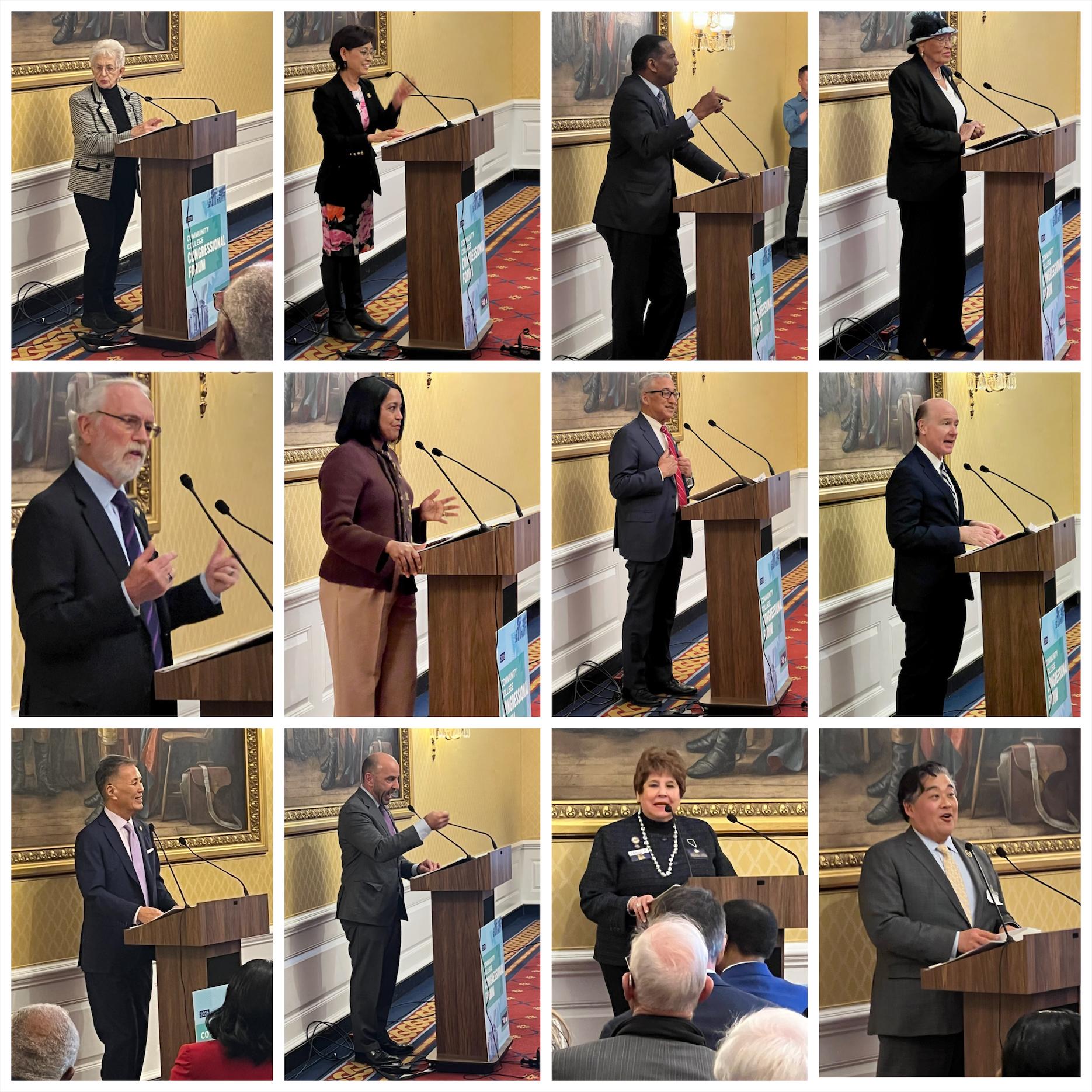
Later in the day, NLS attendees convened in the historic Capitol building, where a bipartisan group of 10 lawmakers stressed their support for community colleges at the Community College Congressional Forum.
“This support did not happen by accident,” ACCT President & CEO Jee Hang Lee told attendees. “Your advocacy, telling your stories, and making the case for community colleges helped build this strong support.”
Rep. Virginia Foxx (R-N.C.) urged trustees and community college leaders to look for what she called “the T-word”–training—in their literature and websites, “and get it out.”
‘You are not in the business of training dogs, you are in the business of educating professionals,” she said. “We treat people who work primarily with their hands as second-class citizens… Change the image of your programs, and you’ll have more people wanting to avail themselves of the programs that you offer.”
Pointing to the so-called “ghost students” who have defrauded colleges in California and around the country, Rep. Young Kim (R-Calif.) stressed the importance of “protecting the integrity of the community college system so resources can actually reach the students.” Her No More Scams Act would establish an federal interagency task force to coordinate fraud investigations. She also urged further simplification of FASFA and related processes. “It's easier to get through the DMV than through the financial aid process,” she said.
Rep. Burgess Owens (R-Utah) stressed the potential of Workforce Pell to improve workforce readiness. He highlighted the role that learning and employment records (LERs) could play in supporting career exploration and documentation of skills. ‘We need a workforce that we have not done a really good job preparing for now,” he said. “This is a digital record that allows us to really know exactly what to get done and do it very well.”
Rep. Jimmy Panetta (D-Calif.) highlighted the role community college played in his life, noting that the partisan rancor on Capitol Hill belied the bipartisan support for community colleges among lawmakers from both sides of the aisle.
“There are amazing people from all walks of life fighting for your issues,” Panetta said. “They are ensuring that there are enough Pell Grants to go around, that funding is there for TRIO, for HSIs, for HBCUs.”
Rep. Alma Adams (D-N.C.) called community colleges “core infrastructure for workforce development,” noting that workforce gaps “are not a demand problem, but a capacity problem.”
“Colleges are being asked to do more with less… at the same time facing… strain and uncertainty around federal investments,” Adams said, noting that she hopes to “protect and strengthen federal grants” and ensure that the federal government will be a “reliable partner.”
Noting the growing number of families in his rural district who will include first-generation college students, Rep. Dan Newhouse (R-Wash.) urged community college leaders to continue their advocacy for those students and their institutions. “Thank you for being here and letting us know your priorities, which should be our priorities,” he said.
Rep. Jahana Hayes (D-Conn.) pointed to her own experiences at Naugatuck Valley Community College as a “launchpad” for her life. Noting “it should not be this hard to get a higher education,” she stressed the importance of holding elected officials accountable.
“Your responsibility as the leaders of community colleges and advocates for the students they serve is to hold elected officials responsible,” she said. “Look at their voting records. Look at the legislation they’re supporting… It is not enough to stand here and say it. Follow the work of your leaders in Congress.”
Rep. Robert Aderholt (R-Ala.) pointed to bipartisan efforts to maintain funding for Pell, TRIO, and other key education programs in the funding bills which passed in the weeks before the NLS. He also urged community college leaders to look to directed Congressional funding—formerly known as earmarks—as a way to support specific programs. Noting that earmarks supported three key community college programs in his district, Aderholt said “we in Congress want to make sure we are being really proactive and responding to what our constituents want. And there’s no better way to do that.”
Rep. Bobby Scott (D-Va.), ranking member of the House Committee for Education and Workforce, pointed to decades of underinvestment in the nation’s workforce development system, calling Workforce Pell “a microscopic bit of good news” in the One Big Beautiful Bill Act passed last year.
Noting community colleges have considerable experience working with federal and state officials, local employers, and regional accreditors, Scott said that they should have the “inside track” on standing up Workforce Pell programs.
“You’ll be in a position to get your programs approved and have young people take full advantage of those programs,” he said.
Rep. Mark Takano (D-Calif.) urged community college leaders to navigate what he called the “chaos” of recent events and to embrace the inherent open access and inclusivity of community colleges.
“It’s at the core of what we do,” he said. “Do not be afraid. Stand for what you know your mission is.”
"When chaos in Washington comes to an end, we need to be ready to strengthen community colleges,” Takano added. “Our country is strongest when we have robust educational options, and community colleges are a vital part."
The 2026 NLS wraps up Wednesday with closing keynote addresses by Rep. Suzanne Bonamici (D-Ore.) and Rep. Juan Ciscomani (R-Ariz.). Nearly 1,200 community college leaders — including more than 115 students — are attending this year’s legislative summit.
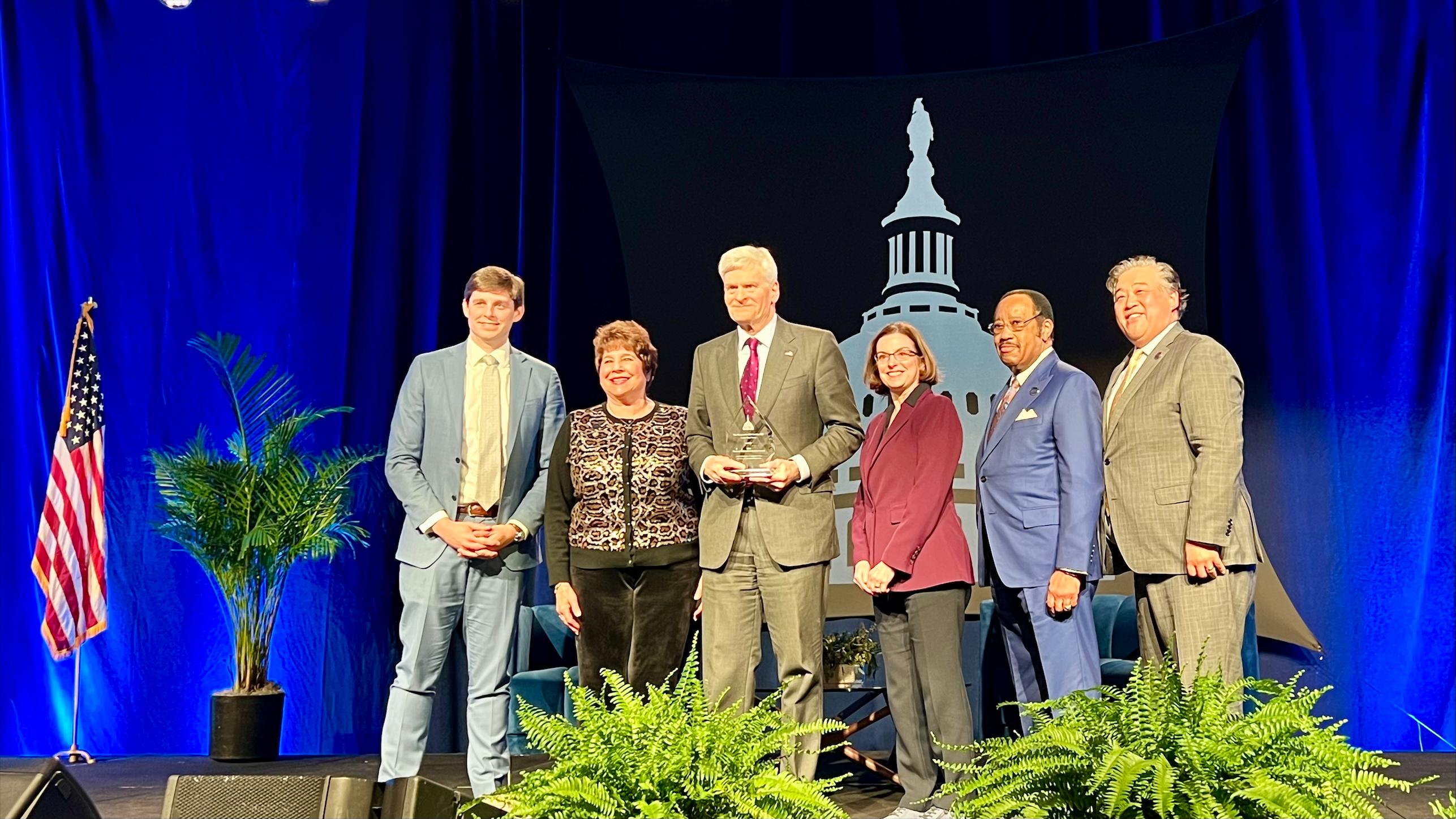
Two community college graduates now serving in Congress closed out the 2026 National Legislative Summit Wednesday morning by stressing that their experiences changed not just their lives, but those of countless others. “The stories of community college graduates are endless,” said Rep. Juan Ciscomani (R-Ariz).
A member of the Community College Caucus, Ciscomani stressed his support for DACA and Dreamers, funding for TRIO, and his CONSTRUCTS Act bill, which would create a grant program to fund and develop residential construction education and certification programs at community colleges, junior colleges, and trade schools.
Bonamici noted that too many people still think “a college student is a 19-year-old in a dorm with a meal plan… But so many students are struggling to put food on the table, find housing, afford childcare, and make ends meet,” she said. “Policymakers need to understand that.”